It is a fair question. AI image generation tools have advanced rapidly, and the results, at a glance, can look impressive. For brands under pressure to produce more content, faster and at lower cost, the appeal is obvious.
But here is the thing. A brand campaign is not a mood board. It is not a social media experiment or an internal presentation. It is a piece of creative work that needs to perform — visually, legally, and commercially. And that changes the calculation considerably.
In this blog, we break down the real differences between professional CGI and AI-generated imagery, where each technology genuinely excels, and how brand marketers in the UK and Europe should be thinking about this decision in 2026 and beyond.
1. What is CGI in Advertising?
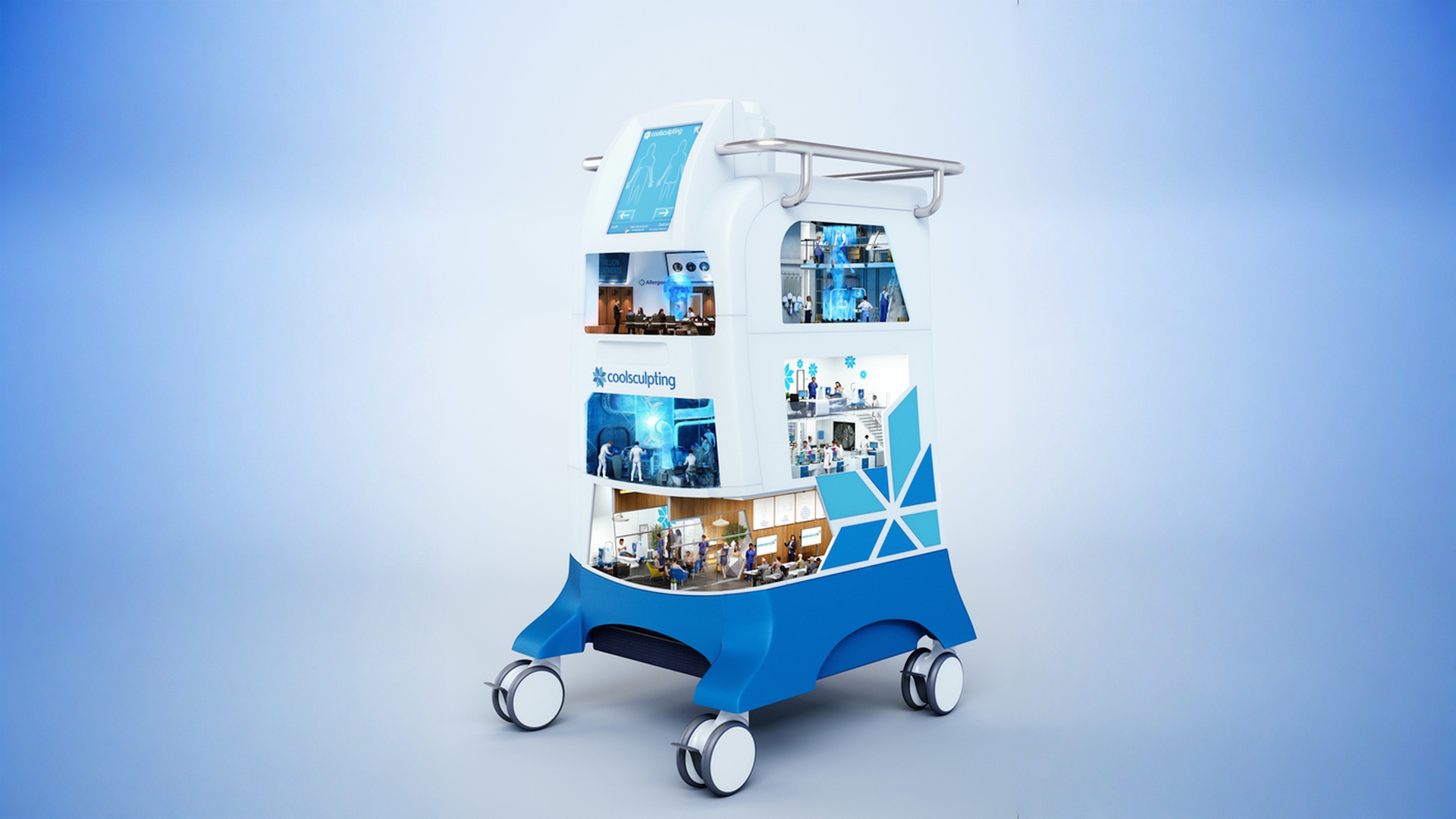
CGI (Computer-Generated Imagery) involves the production of images, animations and visual environments that are entirely created through the use of 3D modelling and rendering software. In an advertising situation, CGI could refer to a photo-realistic product render, a character design, an animated sequence, a virtual environment, or a complicated post-production composite which combines CGI elements with real footage.
At professional studio level CGI is considered a craft since artists create each and every element from scratch, including the geometry, the textures, the lighting, the shadows and the reflections, having complete control over all the variables. The end result is an image which doesn’t just appear real but which behaves in a realistic way, conforms to brand guidelines and can be reproduced consistently in every format and in every market.
Firms like Nike, Samsung and Unilever have for many years depended on specialist CGI studios simply because of the degree of control this gives them. Professional CGI is the method that achieves this when it is necessary for a product to appear perfect in every single frame, in a worldwide advertising campaign, on a billboard, in a television advertisement and on a mobile screen.
2. What is AI-Generated Imagery?
AI-generated images make use of machine learning models which have been trained on huge collections of existing pictures in order to create visuals based on a text prompt or a reference input. Because of tools like Midjourney, Stable Diffusion, Adobe Firefly and DALL-E, this technology has become widely available and now enables anyone to produce a highly impressive image in just a few seconds.
The speed and accessibility are genuinely remarkable. For content teams producing high volumes of social assets, blog illustrations or internal creative references, AI generation tools offer a meaningful productivity boost.
However, it is important to understand what AI image generation actually is, at a technical level. It does not construct a scene the way a CGI artist does. It does not model geometry, simulate light, or build a product from its specifications. It predicts what an image should look like based on statistical patterns in its training data. The distinction may sound academic, but in a campaign context, it matters enormously.
3. CGI vs AI-Generated Imagery — The Key Differences for Brand Campaigns
When evaluating CGI vs AI image generation for advertising, the differences that matter most to brand marketers are not about aesthetics alone. They are about control, consistency, legal ownership and campaign-grade reliability.
| Factor | Professional CGI | AI-Generated Imagery |
|---|---|---|
| Visual quality | Photorealistic, fully controlled | Variable; can be impressive or inconsistent |
| Brand consistency | Exact colour, geometry and assets every time | Difficult to replicate precisely across outputs |
| IP and legal ownership | Clear creative ownership; no third-party training data risk | Legally complex; training data copyright unresolved in UK/EU |
| Product accuracy | Built from actual product specs and CAD data | Approximated from pattern recognition; cannot guarantee accuracy |
| Revision control | Precise, predictable amendments | Regeneration can produce unexpected results |
| Production time | Days to weeks depending on complexity | Minutes to hours |
| Cost | Higher upfront investment; strong ROI at scale | Lower initial cost; hidden costs in iteration and quality control |
| Regulatory suitability | Fully compliant; suitable for medical, pharma, legal advertising | Unclear provenance; unsuitable for regulated sectors |
For a brand running a single-market social campaign with a low compliance requirement, AI generation may be a workable option for certain assets. For a multi-market European campaign, particularly one involving a flagship product, a regulated industry, or a high-production broadcast requirement, professional CGI is not a luxury. It is the standard.
4. Where AI-Generated Imagery Falls Short for Professional Campaigns
It would be dishonest to say AI-generated imagery has no place in a modern brand’s creative workflow. It does. But there are specific areas where its limitations are not minor inconveniences, they are campaign-critical failures waiting to happen.
Brand consistency across a campaign. AI tools cannot reliably reproduce the same product, character, or environment from one output to the next. A CGI studio works from your brand’s actual asset library — your exact product geometry, your precise Pantone references, your approved lighting treatment. An AI tool works from a prompt. The difference becomes obvious the moment you place two AI-generated images side by side.
Intellectual property and legal risk. This is arguably the most significant issue for UK and European brands right now. AI models are trained on third-party imagery, and the legal frameworks governing copyright in AI training data are still evolving across the EU and under UK law post-Brexit. Several major legal challenges are ongoing. For brands in regulated sectors such as pharmaceuticals, financial services, healthcare and more using AI-generated imagery in campaign material carries real legal exposure that most legal teams are not yet comfortable signing off on.
Product accuracy. If your campaign features an actual product such as a piece of medical equipment, a consumer electronic, a luxury item, AI cannot build it from specifications. It will approximate. For lifestyle or abstract imagery that approximation may be acceptable. For product advertising, it is not.
Post-production integration. Professional CGI is designed to sit within a broader production pipeline — composited with live footage, graded, adapted for multiple formats. AI-generated images are outputs, not assets. Integrating them into a complex post-production workflow is rarely straightforward.
5. When CGI is the Right Choice for Your Brand
For brand marketers evaluating CGI advertising in the UK and across Europe, the question is rarely whether CGI is the better tool in a professional campaign context, it typically is. The more useful question is: which projects demand it most?
CGI is the right choice when:
Product launches require precision. If your campaign centres on a hero product—whether it is a consumer electronics launch, a new vehicle model, a cosmetic range, or a medical device- CGI lets you showcase it in perfect detail before a single physical unit is ready for a photoshoot.
The campaign runs across multiple European markets. Adapting CGI assets for different markets, formats and languages is far more efficient than reshooting or regenerating. The base asset remains consistent; localisation is layered on top.
You are working in a regulated sector. Healthcare, pharmaceuticals, financial services and legal advertising all operate under strict rules about the accuracy and provenance of imagery. CGI produced by a professional studio comes with a clear creative chain of ownership.
Animation or VFX is involved. The moment your campaign includes motion, a product reveal, a brand character, an animated product demonstration, CGI is the only credible route to a broadcast-quality result.
Long-term asset value matters. A well-produced CGI asset can be repurposed for years across web, print, broadcast and out-of-home. The upfront investment amortises across every subsequent use.
6. Can CGI and AI Work Together?
The short answer is yes and increasingly; professional studios are exploring where AI tools can support the CGI workflow without compromising the quality of the final output.
AI has a legitimate role in the early stages of creative production: generating concept references, exploring mood directions quickly, building rough environment sketches that a CGI artist then refines. Used as a concepting tool rather than a finished asset generator, it can genuinely accelerate the pre-production phase.
Some studios are also experimenting with AI-assisted upscaling, texture generation and rendering acceleration. These are the areas where machine learning augments the artist’s work rather than replacing it.
What professional studios are not doing is using AI-generated imagery as a substitute for the final, campaign-ready output. The distinction is important. AI as a creative accelerator within a professional pipeline is a very different proposition to AI-generated imagery handed directly to a client as a campaign deliverable.
For brands, the practical implication is this: working with a CGI studio that understands both disciplines gives you the speed benefits of AI at the concepting stage and the quality, consistency and legal security of professional CGI at the delivery stage. That combination is increasingly where the smartest campaigns in the UK and Europe are headed.
7. The Verdict AI Imagery vs CGI
AI-generated imagery is a genuinely useful tool. It is not, however, a replacement for professional CGI in a brand campaign context — at least not in 2026, and not for the kinds of campaigns that matter most to serious brands operating in the UK and European market.
The brands that will produce the strongest visual campaigns over the next few years will not be the ones that default entirely to AI or stubbornly avoid it. They will be the ones that understand which tool is right for which job and who to call when the brief demands the highest standard of craft.
If you are planning a campaign that requires photorealistic product CGI, animation, VFX, or post-production at a professional level, speak to the team at Boom CGI. Based in London and working with leading agencies and brands across the UK and Europe, we have been creating the kind of content that stops people in their tracks since 2015.
8. Want a Post-Production Pipeline That Actually Holds Together?
Boom CGI manages editorial, VFX and colour grading under one roof — so nothing gets lost between stages.FAQs: CGI vs AI Generated Imagery
What is the difference between CGI and AI-generated imagery in advertising?
CGI is built by skilled artists using 3D modelling and rendering software, giving complete control over every visual element. AI-generated imagery is produced by machine learning models that predict what an image should look like based on training data. CGI is purpose-built for each campaign; AI imagery is generated from statistical patterns.
For professional brand advertising, the difference in quality, consistency and legal ownership is significant.